 Watchlist Team
 20 Jul 2026
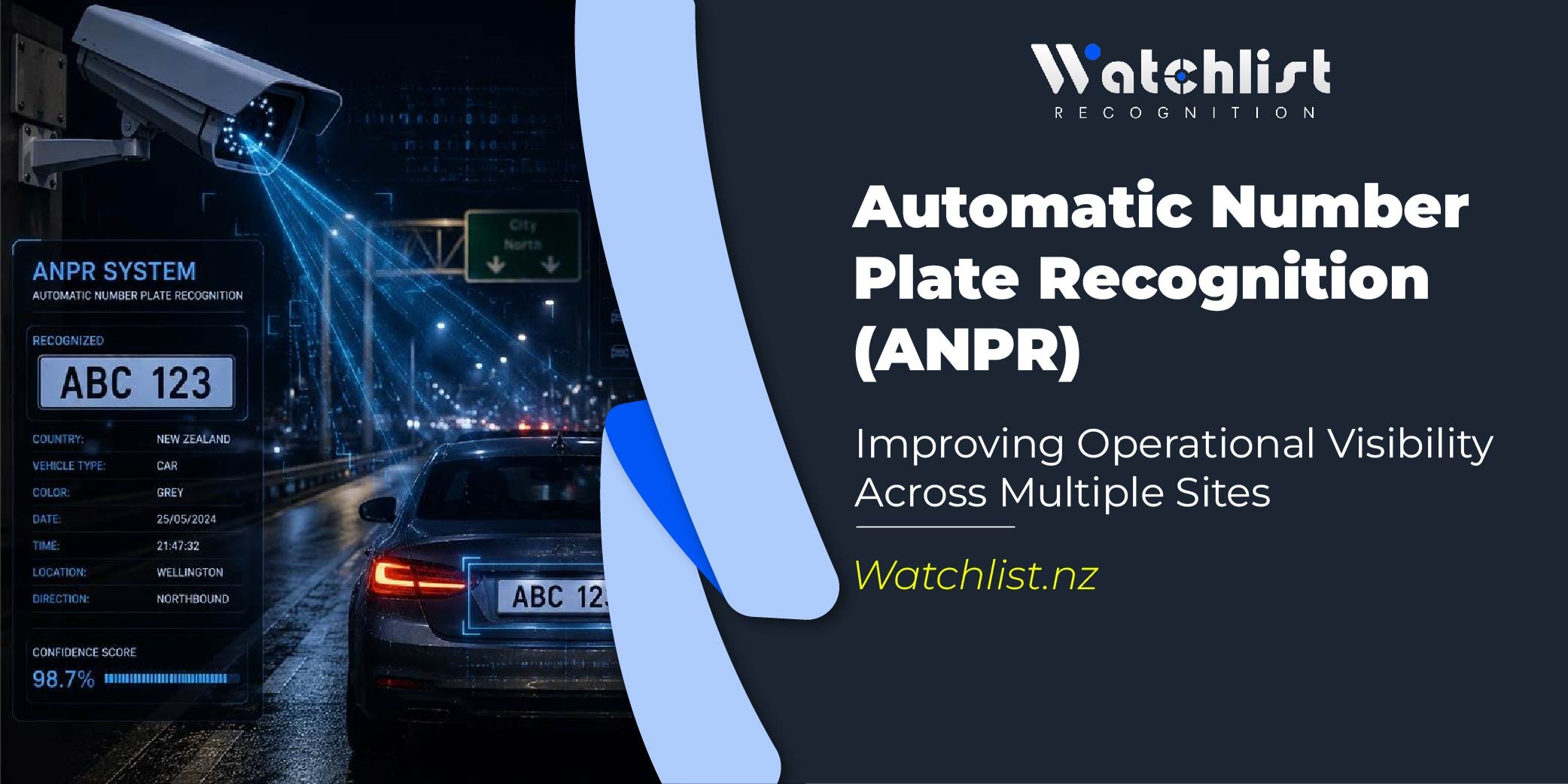
Automatic Number Plate Recognition (ANPR): Improving Operational Visibility Across Multiple Sites
For organisations managing operations across multiple sites, one of the most persistent visibility challenges is vehicles. Who is on site? Which vehicles are authorised? Has a vehicle associated with a previous incident returned? When did the contractor's truck arrive and when did it leave?
Manual answers to these questions are slow, inconsistent and resource-intensive. Automatic number plate recognition (ANPR) makes them automatic.
ANPR technology reads vehicle number plates in real time as vehicles enter, exit, or move through a monitored area and compares that data against defined lists to trigger alerts, log movements, or enable access decisions. It is one of the most operationally valuable and widely deployed recognition technologies in New Zealand, used across retail, logistics, critical infrastructure, commercial property and law enforcement support contexts.
How ANPR Works
An ANPR system typically consists of dedicated cameras positioned at entry and exit points, combined with software that extracts the number plate characters from the image, standardises the format and checks it against one or more configured lists.
Depending on configuration, the system can:
• Grant or deny access automatically based on an authorised vehicle list
• Trigger an alert when a vehicle associated with a previous incident is detected
• Log all vehicle movements with timestamps for operational and compliance purposes
• Cross-reference across sites flagging if a vehicle has appeared at multiple locations or at unusual times
• Integrate with existing access control or security systems to provide a unified operational picture
Modern ANPR platforms operate in variable lighting conditions, including at night and can process vehicles moving at normal site speeds without requiring vehicles to stop.
The Multi-Site Visibility Problem
Single-site ANPR is useful. Multi-site ANPR is transformative.
Organisations managing distributed operations retail networks, logistics depots, commercial property portfolios, fuel and convenience sites face a specific operational problem: incidents, patterns and risks don't stay in one place. A vehicle involved in a fuel drive-off at one site may appear at a sister site two hours later. A contractor's vehicle logged at a depot should not also appear at a restricted access zone on the other side of the city at the same time.
Without a unified vehicle recognition platform, these patterns are invisible. Each site manages its own records. Cross-referencing happens manually, if at all and typically only after something has already gone wrong.
A properly configured ANPR system with multi-site capability changes this. Watchlists are maintained centrally. Alerts can be configured at the network level. Operations teams get a single view of vehicle activity across all sites and the ability to act on what they see.
ANPR in the New Zealand Context
ANPR is already deeply embedded in New Zealand's operational landscape. NZ Police access ANPR-based platforms approximately 700 times per day across a wide range of crime investigation types not just retail theft, but gang disruption, stolen vehicle recovery and broader intelligence gathering. That level of daily operational reliance reflects both the maturity of the technology and the confidence that has built up around it.
For private sector operators, ANPR sits in a different regulatory category than facial recognition. Number plate recognition does not typically constitute biometric processing under the Biometric Processing Privacy Code 2025, because number plates identify vehicles rather than individuals. This makes ANPR a lower-friction starting point for organisations building out a recognition capability and a practical complement to facial recognition for those deploying both.
Common ANPR Use Cases Across Industries
Retail and hospitality: Alert when a vehicle associated with previous theft, violence, or drive-off is detected entering a car park. Log vehicle movements to support incident investigations.
Logistics and warehousing: Automate access at depot gates by recognising authorised supplier and contractor vehicles. Monitor unexpected vehicle arrivals outside scheduled windows.
Commercial property: Manage visitor and tenant vehicle access across multi-tenanted sites. Generate utilisation data from car park entry and exit logs.
Fuel and convenience retail: Detect drive-off vehicles in real time and share alert data across a network. Flag returning vehicles for prioritised staff attention.
Critical infrastructure: Control vehicle access to secure perimeters without requiring staff at every entry point. Maintain complete audit logs for compliance and incident review purposes.
Combining ANPR and Facial Recognition
For many organisations, the most powerful deployment model combines automatic number plate recognition with facial recognition on a unified platform. This is because vehicle recognition and person recognition address complementary gaps.
A delivery driver whose vehicle is authorised may not be the person who normally drives it. A vehicle on a watchlist may carry multiple occupants. A person of interest may arrive on foot rather than in a vehicle. Having both layers of recognition active and connected to the same alert and response infrastructure gives security and operations teams a much more complete picture than either technology provides alone.
This is the direction the leading recognition intelligence platform privacy-conscious recognitions in the ANZ market are moving: not ANPR and facial recognition as separate systems, but as integrated capabilities operating from a shared watchlist and governance framework.
Building Operational Visibility with Watchlist.nz
Watchlist.nz's vehicle recognition platform is built for multi-site operational deployments across Australia and New Zealand. It enables organisations to configure and manage watchlists centrally, monitor vehicle movements across distributed locations and receive real-time alerts through a unified interface.
For organisations ready to extend that capability with facial recognition, the platform supports integrated deployment giving security and operations teams a single view of who and what is present across their sites.