 Watchlist Team
 17 Aug 2026
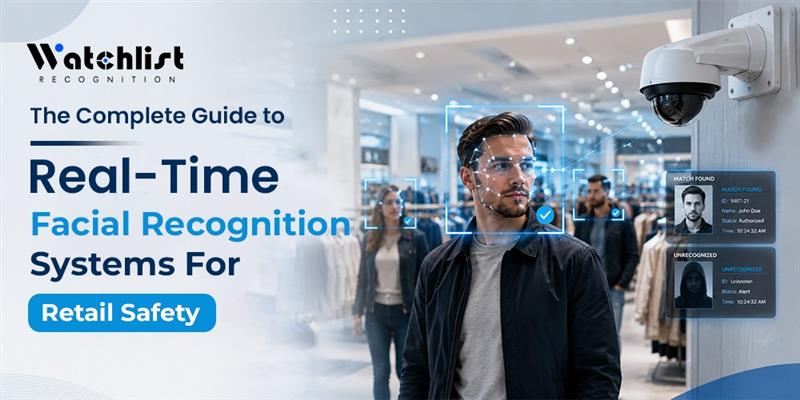
The Complete Guide to Real-Time Facial Recognition Systems for Retail Safety
Introduction
Retail environments face unprecedented workplace violence and security challenges. Real-time facial recognition systems have emerged as a critical security solution, with major New Zealand retailers like Bunnings, Foodstuffs and Briscoes implementing advanced facial recognition software in stores across the country. This guide explores how facial recognition systems work, their advantages and why facial recognition software is becoming essential for modern retail security.
What is Real-Time Facial Recognition Technology?
Real-time facial recognition refers to technology that instantly identifies individuals by analyzing facial features as they enter a location. Unlike traditional surveillance systems requiring manual review, real-time facial recognition systems process face data in seconds, enabling immediate security responses.
A facial recognition system captures facial images and converts them into biometric templates (digital representations of unique facial features), then compares these against a watchlist database to identify known offenders. The process is automated but always includes human verification before any action is taken.
How Facial Recognition Software Works
Modern facial recognition software operates through a five-step process:
Image Capture - High-resolution cameras capture facial images at store entrances
Biometric Conversion - Software converts the facial image into a digital biometric template using unique facial data points
Database Comparison - The facial recognition system cross-references the template against enrolled watchlist profiles
Accuracy Verification - Matches are flagged only when accuracy exceeds thresholds (93% for Bunnings, 92.5% for Foodstuffs)
Data Deletion - Non-matching images are automatically deleted within 10 seconds
Key Advantages of Facial Recognition Systems
Immediate Threat Detection - Identifies threats in seconds, enabling rapid staff response
Enhanced Workplace Safety - Enables staff to recognize known violent offenders before incidents occur
Automated Monitoring - Reduces manual security burden, allowing staff to focus on customer service
High Accuracy - 93%+ accuracy with mandatory human verification before any action
Privacy-Focused - Non-matching images deleted within 10 seconds; no ongoing store surveillance
Implementation in Retail
Before any facial recognition system activates, retailers implement rigorous watchlist procedures. Only individuals who have committed serious harm (violence, threats, weapons incidents, organized retail crime) are enrolled. Watchlists categorize offenders as "Extreme Threat" or "High Risk."
Once deployed, the system works as follows: A customer enters the store, cameras capture their facial image, the system analyzes biometric features, and compares the template against the watchlist database. If a match exceeds the accuracy threshold, trained staff members independently review the alert. Store leadership then decides on appropriate action - which may include observing the person, contacting police or asking them to leave.
Privacy Safeguards and Regulatory Compliance
New Zealand's facial recognition software deployments operate under strict frameworks:
Office of the Privacy Commissioner approval required before implementation
Privacy Impact Assessments confirm safeguards reduce privacy intrusion to acceptable levels
Encryption for all biometric data transmission and storage
Automatic deletion of non-matching images (10 - 72 seconds); no indefinite storage
Minors and vulnerable persons excluded from watchlists
Real-World Implementation: New Zealand
Foodstuffs South Island launched facial recognition trials in October 2025 at three Christchurch supermarkets (New World St Martins, Pak'nSave Papanui, Pak'nSave Moorhouse). After demonstrating measurable safety improvements, the system became permanent and expanded to a fourth location (New World Stanmore).
Bunnings implemented facial recognition systems across all New Zealand stores, calibrated to 93% accuracy. The system identifies known offenders who have committed serious harm, with biometric templates automatically converted and checked. Images are permanently deleted within 10 seconds if no match is found.
Frequently Asked Questions
Q: How is facial recognition software different from surveillance?
Facial recognition software performs automated threat identification, not ongoing surveillance. It analyzes one image at store entry and deletes non-matches immediately. It doesn't monitor customers throughout stores, making privacy intrusion minimal.
Q: What accuracy rate is required for facial recognition systems?
Industry standards maintain 92.5-93% minimum accuracy thresholds. This ensures only high-confidence matches trigger alerts. All matches require independent human verification before any store action is taken.
Q: Is real-time facial recognition legal in New Zealand?
Yes, when implemented according to Privacy Act 2020 requirements and with Office of the Privacy Commissioner approval. Retailers must conduct Privacy Impact Assessments and communicate transparently with customers.
Conclusion
Real-time facial recognition systems represent a significant advancement in retail security. By automating threat identification while maintaining human decision-making, facial recognition software enables safer work environments without compromising customer privacy. New Zealand retailers' experiences demonstrate that when implemented carefully with appropriate safeguards, staff training, and independent oversight, these systems can meaningfully reduce serious harm.