 Watchlist Team
 16 Nov 2026
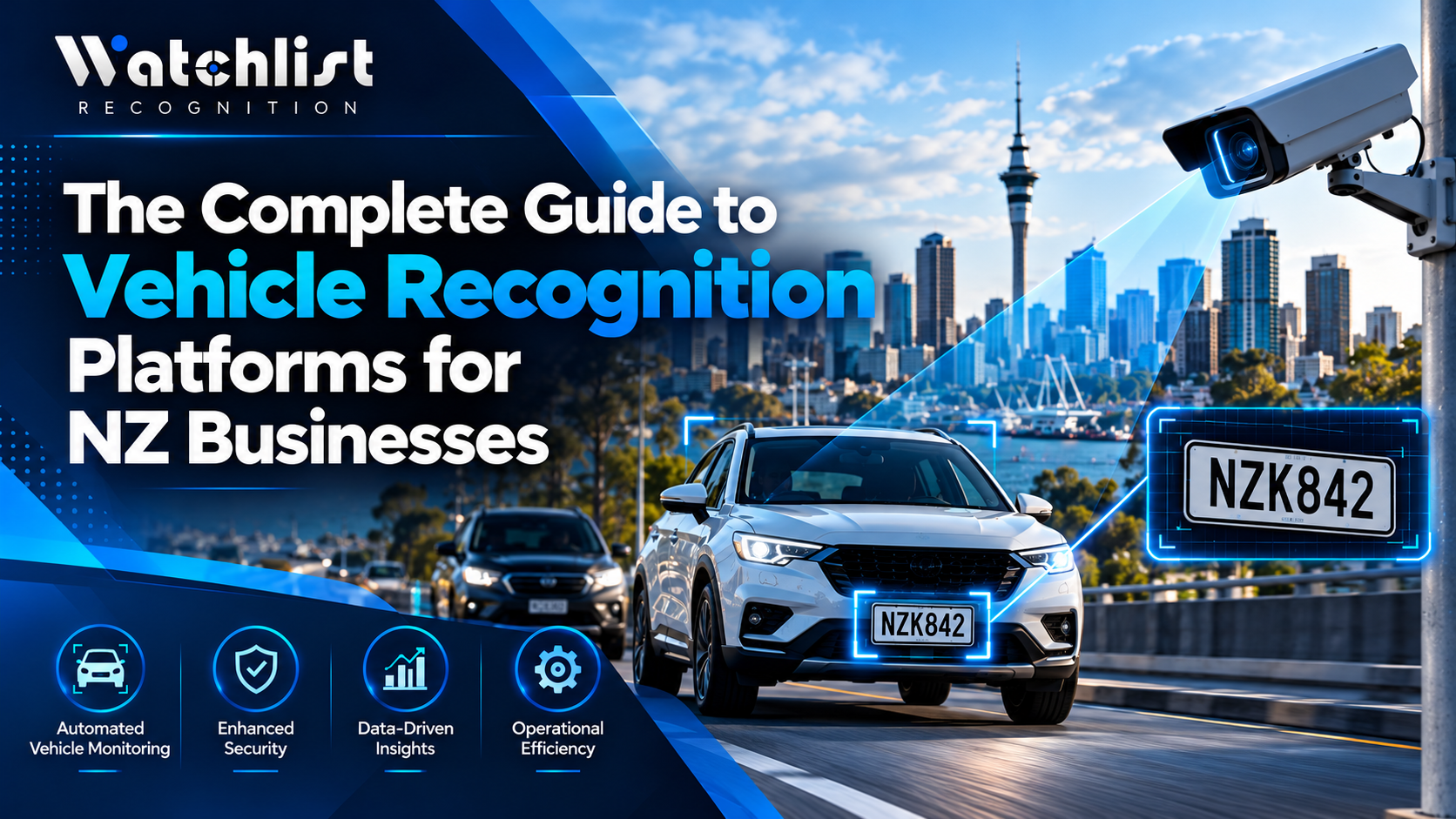
The Complete Guide to Vehicle Recognition Platforms for NZ Businesses
Introduction
Some problems at a business come from the same source again and again: the car that drove off without paying, the vehicle that keeps turning up after a trespass notice, the van that has no reason to be in your yard at 2am. Staff often notice these patterns, but noticing is not the same as being prepared.
A vehicle recognition platform turns that noticing into something your whole team can rely on. It reads number plates automatically, checks them against a list you control, and alerts the right person when a vehicle of interest appears. This guide explains how these platforms work, where they are used, and what to consider before adopting one in New Zealand.
What Is a Vehicle Recognition Platform?
A vehicle recognition platform is a system that combines cameras, plate-reading software and management tools in one place. The technology at its core is usually called automatic number plate recognition (ANPR), also known as license plate recognition. If you have searched for license plate recognition in NZ, this is what you were looking for.
The "platform" part matters. Reading a plate is the simple step. The real value comes from what surrounds it: a managed list of vehicles, real-time alerts, an incident register, evidence reports, and access controls that decide who can see what. Without those, you simply have more footage to sort through.
How a Vehicle Recognition Platform Works
Most platforms follow the same basic path:
• Capture. A camera positioned at an entrance, gate or forecourt records the vehicle as it arrives.
• Read. The software identifies the plate and converts it into text.
• Compare. That text is checked against your list of vehicles of interest.
• Alert. If there is a match, authorised staff are notified with an image and timestamp.
• Review and log. A person confirms the alert, decides on a response, and the outcome is recorded.
A well-configured system keeps only what your policy says it should. Plates with no match do not need to be stored longer than necessary.
Key Advantages
Earlier warning. Instead of finding out from footage the next day, your team knows when the vehicle arrives.
Consistent memory. The knowledge no longer depends on who is on shift or who remembers an earlier incident.
Faster evidence. Photos, timestamps and notes are captured automatically, so police and insurers get a complete pack quickly.
One view across sites. For businesses with several locations, a vehicle flagged at one site can be recognised at another.
Less manual review. Staff spend less time scrolling through recordings and more time on customers.
Where Businesses Use It
Fuel and convenience. Drive-offs are the clearest example. Flag the vehicle once, and you are alerted whenever it returns.
Retail. Vehicles linked to repeat or organised theft can be flagged, giving staff a quiet heads-up.
Healthcare and community services. Car parks can be monitored for vehicles connected to previous safety incidents involving staff.
Logistics and property. Yards and warehouses can spot unauthorised vehicles and apply trespass bans consistently across sites.
Events and venues. Banned individuals sometimes arrive by car, so gate-level alerts add another layer of awareness.
Connecting Vehicles and People
Vehicles do not cause incidents on their own. People do. Where it is justified and lawful, linking a vehicle to someone on your trespass register means a single alert carries more context. Running vehicle and people recognition on one platform also keeps your lists, alerts and incident records together rather than split across separate tools.
What to Look For in a Platform
When comparing providers, ask practical questions:
• How accurate is plate reading at night, in rain, or with dirty and angled plates?
• How many false alerts should we expect?
• Can we export a complete incident pack in a few clicks?
• Can we manage multiple sites from one dashboard?
• What access controls and audit trails are included?
• How is data stored, and can we set our own retention periods?
• Is local support available?
Privacy Safeguards and Compliance in New Zealand
A number plate can identify a person when it is linked with other information, so it deserves careful handling. In New Zealand, the Privacy Act 2020 governs how organisations collect, store, use and share this kind of data. Sensible safeguards include:
• A documented reason for every vehicle on your list
• Role-based access, so only authorised staff can view data
• Encrypted storage and configurable retention settings
• Clear signage so people know the technology is in use
• A human review of every alert before action is taken
• Regular reviews to remove outdated entries
This is general information, not legal advice. Check your own obligations before deployment.
A Growing Market
Interest in the automatic number plate recognition market has grown as businesses look for tools that go beyond recording incidents. The shift is from "what happened?" to "what is about to happen?", and platforms that pair ANPR with workflows, evidence tools and privacy controls are leading that change.
Frequently Asked Questions
Q: Is a vehicle recognition platform the same as CCTV?
No. CCTV records events for later review. A vehicle recognition platform reads plates in real time, compares them to your list, and alerts staff when a vehicle of interest appears.
Q: Can it work across multiple sites?
Yes. A central platform lets a vehicle flagged at one location be recognised at others, with shared reporting and consistent rules.
Q: Does an alert mean someone has done something wrong?
No. An alert is a prompt for a trained person to check. Plates can be misread and entries can be outdated, which is why human review matters.
Q: Who should be on a vehicle watchlist?
Only vehicles with a documented reason, such as a link to drive-offs, theft or a formal trespass notice. Entries should be reviewed and removed when no longer justified.
Q: Is it legal in New Zealand?
It can be, provided it is used in line with the Privacy Act 2020 and good practice around transparency, security and retention. Take advice for your specific situation.
Conclusion
A vehicle recognition platform is not about collecting more data. It is about recognising patterns your team already sees and giving them a warning while there is still time to act. Used with clear policies, human oversight and sensible privacy controls, it helps businesses protect staff, enforce trespass decisions and produce credible evidence.
Watchlist Recognition combines vehicle of interest detection, a trespass register, incident reporting and privacy controls in one platform for businesses across New Zealand and Australia. To see how it would work at your sites, get in touch with the Watchlist team for a demo.